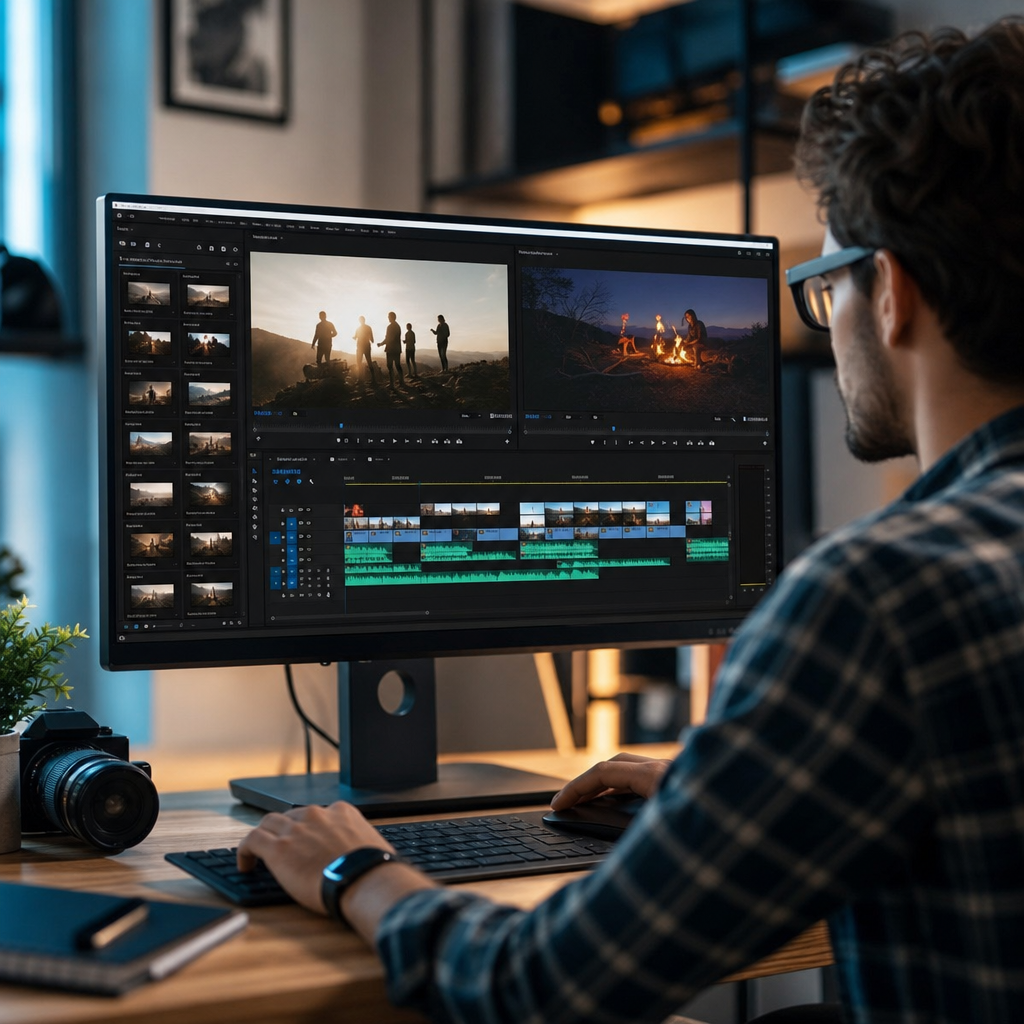
Unveiling the Magic of Video Editing: Crafting Stories Frame by Frame
Video editing is the unseen art that breathes life into raw footage. Whether it’s a short film or a viral YouTube video, editing weaves together disparate shots into a coherent narrative that captivates audiences.
The power of video editing lies in its ability to tell stories without words. A well-executed edit can evoke emotions and build connections that resonate deeply with viewers, immersing them in the filmmaker’s vision.

Understanding the Basics of Video Editing
At its core, video editing involves selecting and combining shots to create a final piece. This process requires a keen eye for detail and a deep understanding of narrative structure.
There are several key elements in video editing, including transitions, effects, and pacing. Each plays a crucial role in the storytelling process, ensuring that the final product is polished and compelling.
Essential Tools for Video Editing
Choosing the right software is vital for any video editing project. Popular choices include Adobe Premiere Pro, Final Cut Pro, and DaVinci Resolve.
- Adobe Premiere Pro: Known for its robust features and versatility, it’s the industry standard for professional editors.
- Final Cut Pro: Preferred by Mac users for its seamless integration with Apple’s ecosystem.
- DaVinci Resolve: Offers powerful color grading tools, making it a favorite for those focused on aesthetics.
Creative Techniques in Video Editing
To create dynamic and engaging videos, editors often rely on a range of techniques. These can transform a simple sequence into a cinematic masterpiece.
- Jump Cuts: Creates a sense of urgency and pace by cutting between similar shots rapidly.
- Match Cuts: Seamlessly transitions between scenes using similar visual elements.
- Cross Dissolves: Smooth transition effect that blends one scene into another, often used to suggest the passage of time.
The Importance of Storytelling
While the technical aspects of video editing are crucial, storytelling remains at the heart of the craft. A good editor understands how to use visual and audio elements to convey the intended message.
Every cut, transition, and effect should serve the story. It’s about finding a rhythm that enhances the narrative, ensuring the audience remains engaged from start to finish.
Collaboration in Video Editing
Video editing is rarely a solo endeavor. It requires collaboration between directors, cinematographers, and sound designers, all working towards a common goal.
This collaboration often extends to feedback from peers or test audiences, allowing editors to refine their work and ensure it resonates with their target audience.
The Future of Video Editing
As technology evolves, so too does the landscape of video editing. Innovations such as AI-driven tools promise to revolutionize the industry, offering editors new ways to enhance their workflow.
Despite these advancements, the core principles of storytelling and creativity will always remain central to the art of video editing.
In conclusion, video editing is an indispensable part of the filmmaking process. It’s where art meets technology, crafting visual narratives that entertain, inform, and inspire.