Revolutionizing Cardiology: How AI is Transforming Heart Disease Diagnosis in Seconds
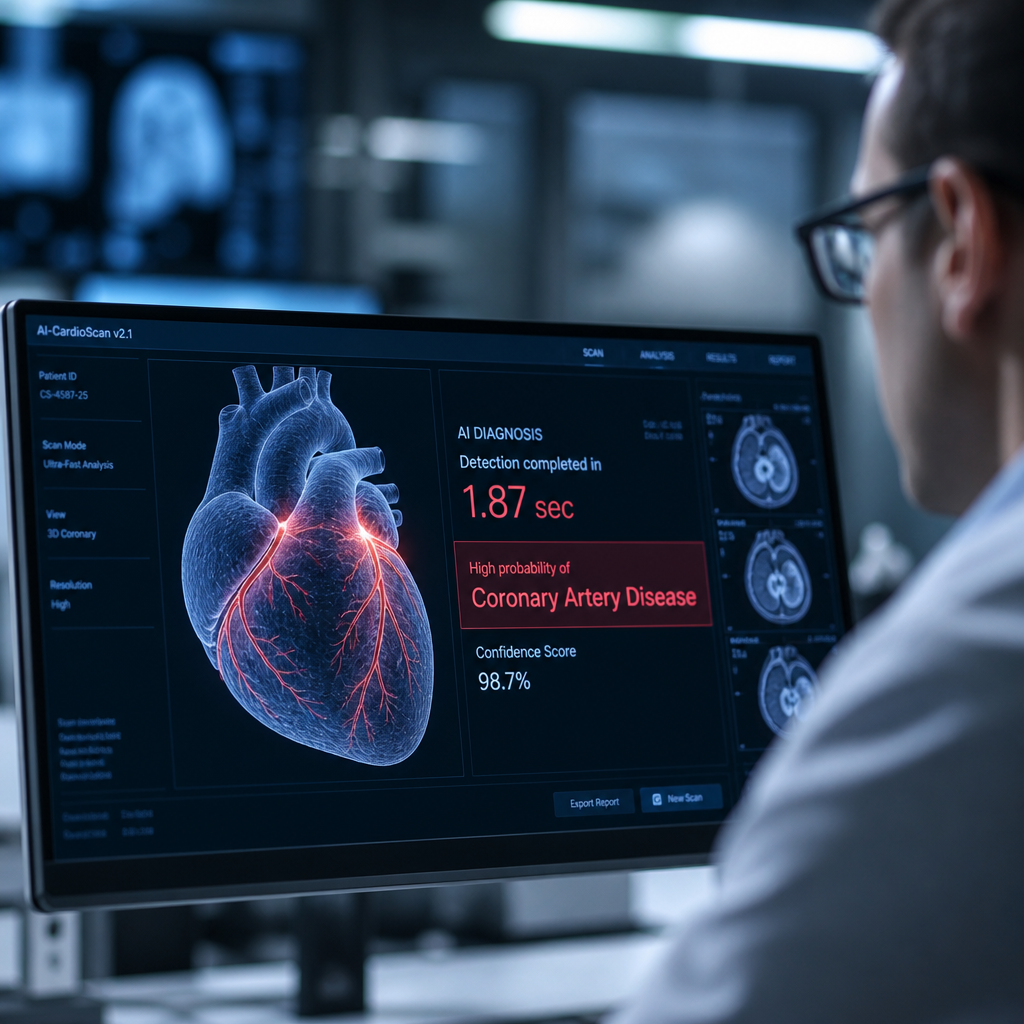
Imagine a world where heart disease can be detected in less time than it takes to boil water. A recent breakthrough in artificial intelligence promises to turn this vision into a reality. This new ‘superhuman’ AI tool is set to reshape the landscape of heart disease diagnostics, delivering results in under two seconds, and it’s already making headlines.
The prospect of diagnosing heart conditions faster and more accurately is a game-changer for both healthcare professionals and patients. With heart disease being the leading cause of death globally, the potential for this technology to save lives is monumental. Let’s dive into the details of how this tool works and the revolutionary impact it could have on healthcare.

What Makes the AI ‘Superhuman’?
This tool leverages cutting-edge machine learning algorithms to analyze medical imaging data with astonishing speed and precision. By processing thousands of images in an instant, the AI is equipped to detect minute anomalies that may indicate heart disease, which might be missed by the human eye. This capability significantly reduces the risk of misdiagnosis.
Efficiency Beyond Compare
Traditional diagnostic methods, such as taking electrocardiograms or performing echocardiograms, often require considerable time for setup and interpretation by specialists. In contrast, the AI tool performs diagnostics almost instantaneously, streamlining the process tremendously.
- AI analysis time: <2 seconds
- Traditional diagnostics: Minutes to hours
- Error margin: Significantly reduced
Implications for Healthcare
The benefits of this AI technology extend beyond speed. It promises to alleviate the workload on healthcare professionals, allowing them to focus on treatment rather than lengthy diagnostics. Additionally, it may reduce healthcare costs by minimizing the need for repeat tests and prolonged hospital stays.
Challenges and Considerations
Despite its promise, integrating AI into healthcare systems entails challenges. Ensuring data privacy, addressing potential algorithm biases, and achieving widespread adoption among healthcare providers remain hurdles to overcome. The transition, while promising, requires careful management and regulation.
Future Prospects
The horizon holds exciting possibilities for this ‘superhuman’ AI. With continued advancements, we may see it expanding into other domains of healthcare, assisting with a broader range of conditions. The integration of AI into everyday medical practice is a forward step toward personalized medicine.
The Road Ahead
The potential unveiling of this technology at a global scale could revolutionize not only cardiology but the healthcare industry as a whole. It is an example of how technology can profoundly benefit society, driving efficiency and effectiveness in medical care.
Conclusion
In an age where time is of the essence, the advent of this ‘superhuman’ AI serves as a beacon of hope for those affected by heart disease. By significantly cutting down diagnostic times, it allows patients to receive critical care faster, proving that technology can indeed have a heartbeat of its own.