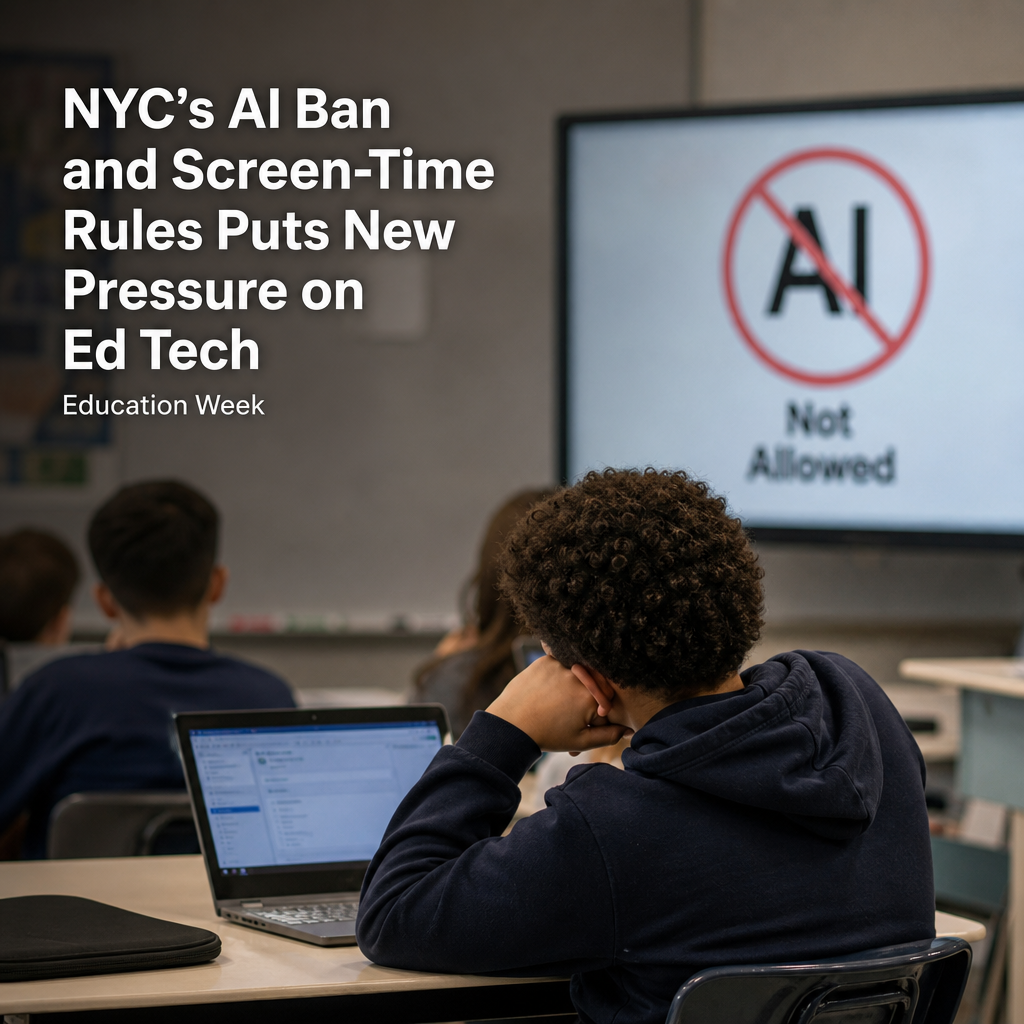
Navigating NYC’s AI Ban and Screen-Time Rules: Implications and Challenges for Ed Tech
The bustling streets of New York City are known for setting trends and making headlines, and this time, it’s not just the fashion or food that is under the spotlight. The city’s recent decision to ban artificial intelligence tools in schools and impose strict screen-time regulations has sent ripples through the education technology sector. This bold move raises questions about the future integration of digital tools in classrooms and how schools will adapt to these new norms.
In an era where digital learning was increasingly being seen as the way forward, NYC’s actions serve as a reminder of the delicate balance between technology and education. The education sector stands on the brink of transformation, with stakeholders from all sides evaluating the impact of these sweeping changes. Educators, parents, and tech companies alike must now navigate this new landscape, fraught with both challenges and opportunities.

The AI Ban: Understanding the Rationale
Artificial intelligence has been a game-changer in many fields, and education is no exception. However, NYC’s ban on AI in schools is rooted in concerns over student privacy and the ethical use of such technologies. The potential misuse of student data, bias in AI algorithms, and the lack of transparency in AI decision-making processes are among the primary worries.
Student Privacy Concerns
The protection of student data has become a paramount issue. AI systems often require access to large amounts of personal information to function effectively. Critics argue that without robust data protection measures, students are vulnerable to breaches of privacy.
Bias and Fairness in AI
Another significant concern is the inherent bias in AI systems. These technologies can sometimes perpetuate existing inequalities, particularly if they are trained on skewed datasets. Ensuring fairness and equity in education is crucial, and any tool that undermines this principle needs reassessment.
Screen-Time Restrictions: A Double-Edged Sword
Alongside the AI ban, New York City has introduced screen-time limitations in schools. Designed to curb excessive digital exposure, these measures aim to promote healthier learning environments. But how do they impact the integration of educational technology?
Benefits of Screen-Time Regulation
Limiting screen time can encourage more active and engaging learning experiences. It promotes face-to-face interactions and reduces distractions, fostering an environment where students can focus better on their tasks.
Challenges to Ed Tech Adoption
For tech companies and educators, these restrictions pose significant hurdles. Many digital platforms rely on extended screen interactions for effective learning outcomes. Adapting to these new rules requires innovation and flexibility.
Adapting to the New Education Landscape
For the education technology sector, these changes present both challenges and opportunities. Companies and educators must explore alternative ways to integrate technology while respecting the new regulations.
Innovative Solutions
Tech companies need to innovate and develop tools that require minimal screen time or offer offline learning opportunities. Educational apps that encourage physical activity or creative offline engagement might see a rise in popularity.
Collaborative Efforts
The path forward involves collaboration between educators, policymakers, and tech developers. Working together will help identify the best practices that align with the city’s educational goals and technological capabilities.
Table: Comparing Traditional and Tech-Based Learning
| Aspect | Traditional Learning | Tech-Based Learning |
|---|---|---|
| Interactivity | Teacher-directed, low tech | High-tech, AI-enhanced personalization |
| Flexibility | Fixed schedule and pace | Self-paced, anytime learning |
| Engagement | Requires physical presence | Interactive multimedia tools |