The Hidden Cost of AI: Who Will Train the Next Generation?
Artificial intelligence has rapidly evolved from a futuristic concept to an integral part of our everyday lives. From personal assistants in our smartphones to advanced diagnostic tools in healthcare, AI is revolutionizing nearly every industry. But beneath its shiny veneer lies a critical concern: the challenge of preparing a new generation to work alongside these intelligent systems.
As AI continues to grow, there is an increasing demand for skilled individuals who can develop, manage, and innovate on these technologies. However, the question remains: Who will take on the responsibility of training these individuals, ensuring that they have the necessary skills to thrive in a world dominated by AI?

The Educational Gap
One of the primary challenges in preparing future generations for an AI-driven world is the existing gap in education. Traditional curriculums are often slow to adapt to technological changes, leaving students unprepared for the realities of the job market.
Current Educational Shortcomings
- Lack of AI-specific courses in high schools and colleges.
- Insufficient emphasis on interdisciplinary skills combining AI with business, ethics, and communication.
- Outdated teaching methods that fail to engage the digital-native generation.
Opportunities for Improvement
While the current educational landscape presents challenges, it also offers opportunities for significant improvement and innovation. Universities and high schools can collaborate with tech companies to provide up-to-date training and resources.
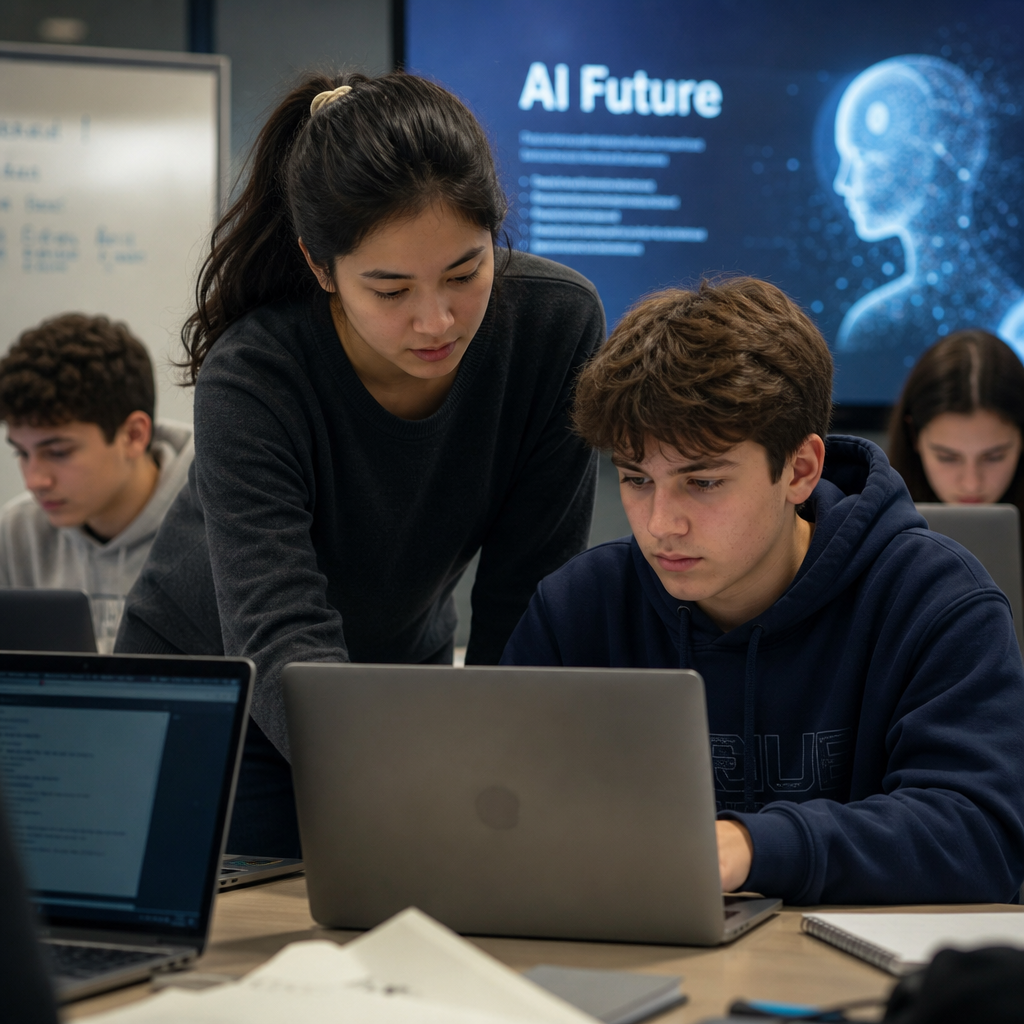
Moreover, educators can incorporate project-based learning, encouraging students to explore AI through hands-on experiences rather than theoretical study alone.
Industry’s Role in Training
The private sector plays a crucial role in bridging the education gap. By offering internships, mentorship programs, and partnerships with educational institutions, companies can create an ecosystem where learning and practical application coalesce.
Successful Industry-Education Collaborations
- Tech giants like Google and Amazon offering online AI courses and certifications.
- Startups collaborating with universities to address specific skill gaps through tailored programs.
- Industry-led hackathons that promote problem-solving and innovation among students.
Encouraging Lifelong Learning
In addition to addressing education for younger generations, there is a growing need to promote lifelong learning among current professionals. As AI technology evolves, continuous education becomes paramount.
Methods to Foster Continuous Learning
- Online learning platforms such as Coursera and Udacity offering flexible learning opportunities.
- Company-sponsored learning initiatives and internal training programs.
- Public and private sector partnerships to develop nationwide upskilling efforts.
The Ethical Dimension
Training the next generation also involves equipping them with the ethical understanding needed to navigate AI’s complex moral landscape. Decisions made by AI are not inherently neutral; they reflect the biases and values of their creators.
Thus, emphasis must be placed on developing ethical guidelines and fostering a sense of responsibility among future AI professionals.
Table: Key Stakeholders and Their Roles
| Stakeholder | Role in Training the Next Generation |
|---|---|
| Educational Institutions | Adapt curriculums to include AI and interdisciplinary skills. |
| Industry Leaders | Offer practical training opportunities and resources. |
| Government Entities | Foster policies that promote AI education and ethical use. |
| Students | Engage in lifelong learning and ethical AI development. |
Conclusion
Addressing the hidden cost of AI—training the next generation—is essential for realizing its full potential in a responsible and innovative manner. Through a concerted effort among educational institutions, industry leaders, and government entities, the digital age can become a force for empowerment rather than disenfranchisement.
The future of AI hinges not just on technological advancements, but on the capabilities and ethics of those who wield it. Now is the time to act.