Amazon’s AI Misstep: How $1.8 Million Slipped Through the Cracks
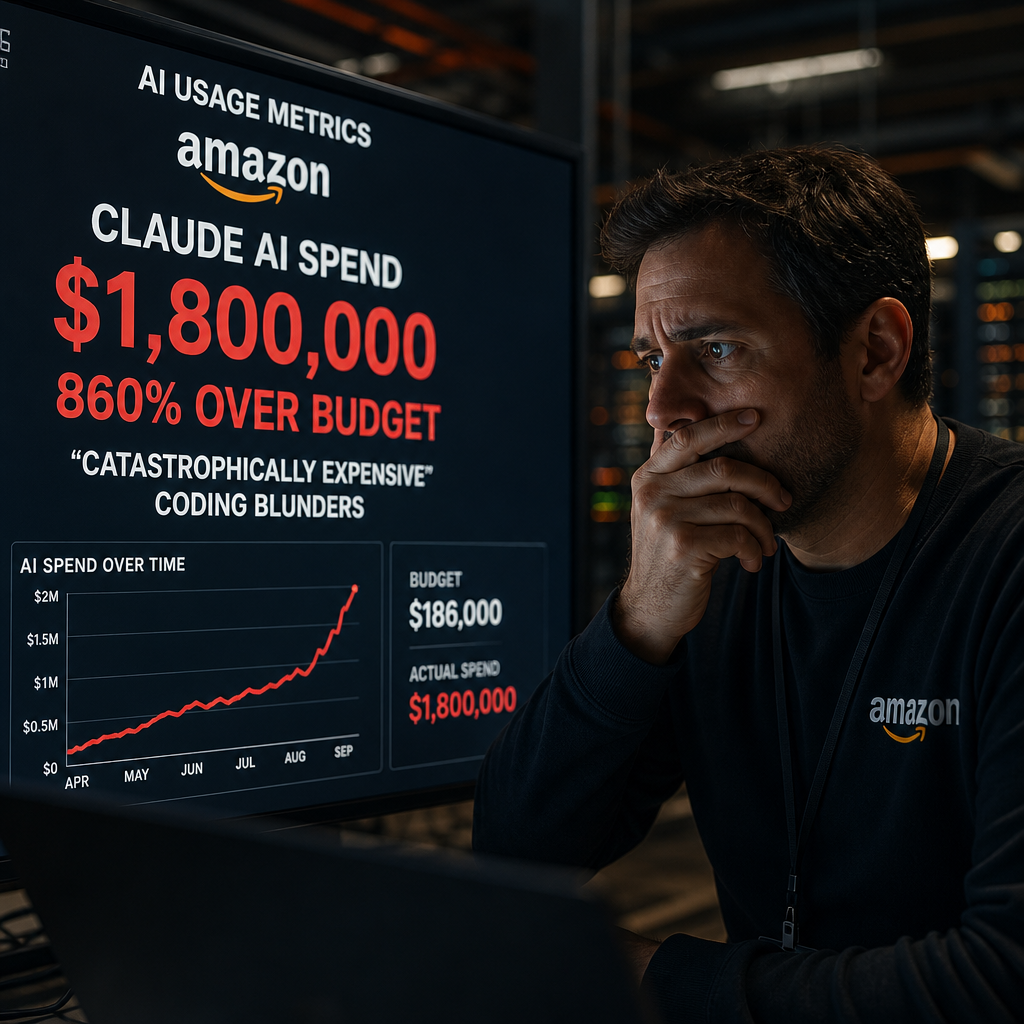
In the labyrinthine corridors of Amazon’s software operations, a costly oversight has emerged, sparking debates on the effective management and deployment of AI. An internal report revealed that Amazon inadvertently spent $1.8 million on a menial coding task using AI, specifically the chat-based model, Claude.
This significant over-expenditure serves as a cautionary tale highlighting the complexities and pitfalls enterprises may encounter in the realm of artificial intelligence. As companies strive to incorporate advanced technologies into their workflows, this incident underscores the paramount importance of strategic planning and budgetary oversight.

The Financial Blow: Understanding the 860% Over-Budget Scenario
The most arresting detail from Amazon’s internal findings is the staggering 860% budget overshoot. Initially set with a moderate budget for an AI-driven task, the automated processes unfortunately snowballed expenses due to unmonitored usage.
Without stringent oversight or effective usage metrics, Amazon saw a simple task morph into a financial sinkhole. These blunders illuminate gaps in both the technical design of the project’s scope and the managerial vigilance expected at one of the world’s largest tech giants.
Breaking Down the AI Usage Metrics
- Task: Menial Coding Assignment
- AI Used: Claude
- Expected Budget: $200,000
- Actual Cost: $1.8 Million
- Budget Overrun: 860%
These metrics reveal more than just numbers—they outline a pattern of mismanagement in task assessment and resource allocation. As AI tools become more sophisticated, the challenge lies in aligning their deployment with clear financial and operational goals.
Lessons Learned: Wise Deployment of AI in the Corporate World
The lessons to extract from this financial debacle extend beyond Amazon’s borders. First, there’s an acute need for end-to-end transparency in AI utilization, ensuring costs align with strategic objectives. Second, setting realistic budgets and adhering to them through careful monitoring becomes indispensable.
Such incidents encourage enterprises to reassess how they integrate AI solutions, urging a balance between innovation and financial feasibility. Amazon’s experience exemplifies the growing pains large enterprises may endure as they embrace AI, highlighting the importance of learning and adapting from these errors.
Preventing Catastrophic AI Expenditures
Mitigating financial risks necessitates robust predetermined protocols for AI task assignments. Regular audits and dynamic tools capable of real-time expenditure tracking can shield companies from similar pitfalls.
Moreover, an intensification of employee training in budget management concerning AI tasks should become a priority. Equipping teams with skills to discern and respond to usage anomalies can prevent small oversights from blossoming into fiscal disasters.
| Plan | Description | Outcome |
|---|---|---|
| Initial Budget | Allocate resources for AI tasks | Undershot financial oversight |
| Execution Phase | Deploy AI with observed metrics | Unhandled budget excess |
| Post-Analysis | Analyze cost and efficiency | Revising future strategies |
The Human Element: Balancing AI and Human Oversight
While the potential of AI is immeasurable, its reliance shouldn’t eclipse human judgment. This scenario serves as a stark reminder that, despite AI’s autonomous capabilities, human oversight remains crucial.
Amazon’s costly lesson cautions companies worldwide to maintain a vigilant human filter in their AI processes, ensuring that innovation doesn’t come at the expense of accountability and rational financial management.