University of Chicago’s Bold Move: A Ban on AI and Technology in Courses
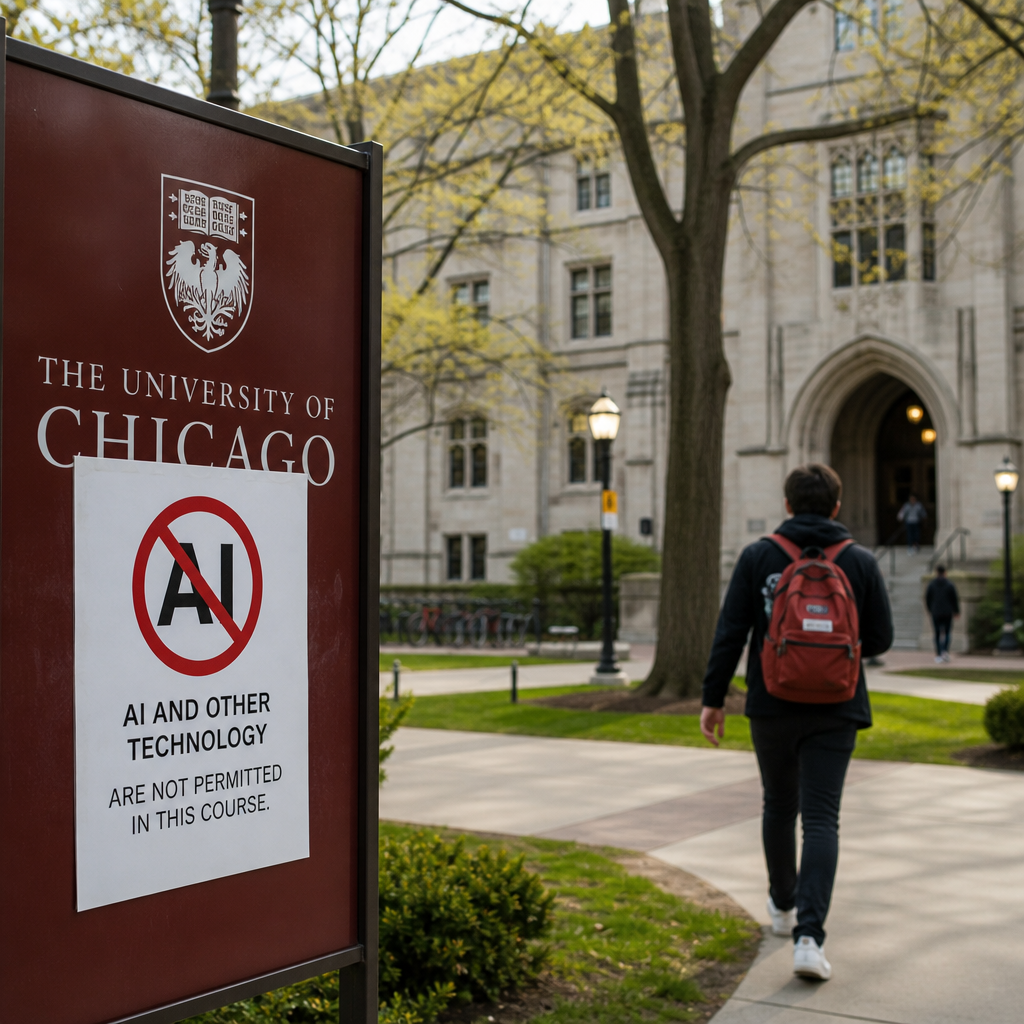
In an era where technology permeates every aspect of our lives, the University of Chicago has taken a bold step. They’ve decided to ban AI and certain technologies in more of their courses. The decision has sparked debates, with proponents and critics voicing their perspectives.
While the integration of AI in education has been widely accepted as the future, this move has prompted many to pause and reconsider their stance. What are the implications of such a decision, and what does it mean for students and educators?

The Rationale Behind the Ban
The university’s approach stems from a desire to enhance traditional learning methodologies. By reducing reliance on technology, they aim to foster critical thinking and interpersonal skills among students.
Moreover, there is a concern about academic integrity. With AI tools capable of crafting essays and solving complex problems, the authenticity of student work comes under question.
Benefits of a Technology-Free Classroom
- Encourages deeper understanding and retention of information.
- Promotes face-to-face interactions, strengthening communication skills.
- Reduces distractions, allowing students to focus more thoroughly on their studies.
Challenges and Criticisms
Despite its noble intentions, the ban is met with criticisms. Technology is an integral part of modern science and humanities, and some argue that completely banning it isolates students from real-world practices.
Furthermore, there is a concern regarding accessibility. Technology offers diverse learning tools that can benefit those with different learning needs.
| Pros | Cons |
|---|---|
| Enhances focus and critical thinking | Potentially limits exposure to real-world tools |
| Promotes academic integrity | Could hinder students with specific learning needs |
| Strengthens communication skills | Criticized for being regressive |
Conclusion: Balancing Tradition and Technology
The University of Chicago’s decision is a reminder of the significance of balance. While technology plays a vital role in modern education, traditional methods that emphasize critical skills remain indispensable.
It is imperative for educational institutions to strike a balance, ensuring students are well-equipped with both foundational skills and modern technological prowess.